Wednesday, August 10, 2011

French toast goes glam


First published Canberra Times 10 August 2011.
It’s a winter’s morning and I wake to the smell of nut brown butter frying in a pan and the sound of eggs being whisked in Mum’s treasured orange melamine mixing bowl. This hum of activity and the unmistakeable aromas of milk, vanilla and nutmeg could only mean one thing – french toast for breakfast.
It also signalled a last delicious snuggle under the covers before wrenching myself out of bed, slipping into school uniform and charging into the kitchen, just in time to see the last of the soaked bread slices lifted from their milky egg bath into the sizzling pan. My job is to sprinkle the cooked slices of french toast with a cinnamon and vanilla sugar mixture before delivering them to the table for breakfast.

Images of this family favourite flooded back to me when a Dijon bistro blackboard listed “pain perdu pudding” as the dessert du jour. I couldn’t resist the temptation to stroll down memory lane.
The dish arrived - a pudding version of french toast, dripping with thick cream, melting over a crunchy praline topping in a sea of pillowy softness. I poked it with my spoon, releasing a puff of eggy steam. This was the smell of memories.

It seems french toast is a favourite the world over, and most countries can claim their own version, sweet, savoury or both. The Roman’s ate it and its existence in England dates back to at least to the time of Henry V when it was known in the Norman world as Pain Perdu, or “lost bread”, a tasty way of using up leftover bread. It had another incarnation in the Old Dart as “Poor Knights of Windsor” where the egg and milk mixture included wine or sherry and it was spread with jam.

The basic concoction of bread dipped in a milky egg mixture and fried in a pan is universal, but after that, the variations are seemingly infinite. In Australia, this essentially breakfast dish has basic variations of sweet and savoury, determined by the addition of salt or sugar to the mix. We also have some startling regional variations, including Vegemite and Marmite, while Queenslanders might refer to their version as fried bread, and serve it with cheese and tomato sauce as a savoury meal (yuck).The Canadians love theirs with bacon and maple syrup.

The Hong Kong version is served for breakfast, made by deep frying stacked sliced bread dipped in beaten egg or soy milk. It is then served with a slab of butter, topped with golden syrup or honey.
In India, they prefer theirs served salty, rather than sweet. Eggs are beaten with milk, salt, green chili and chopped onion. Bread is dunked into this mixture and deep fried in butter or cooking oil. It is normally served with tomato sauce. In the Czech Republic, it arrives with mustard, gherkin and sometimes onion and capsicum.

French toast is the ultimate peasant food, made from simple ingredients, readily available to most people, rich or poor. It’s filling, tasty and lends itself to the addition of almost anything else that comes to hand.
This recipe for French toast pudding is very easy to make. I use a loaf of brioche, cut in half lengthwise and thinly sliced into one centimetre thicknesses. You could use any bread, panettone, croissants, baguette or sourdough for this dessert, as long as you soak the bread in the milk and egg mixture for a few hours before cooking. Serves 8.

French toast pudding
1 loaf of brioche
8 large eggs
1 ½ cups pouring cream
2 cups of milk
3 tbsp sugar
1 scraped vanilla bean
¼ tspn nutmeg, ground
¼ tspn cinnamon, ground
Pinch salt
12 pitted prunes
½ cup brandy
½ cup thickened cream and ½ cup yoghurt to serve

Praline topping
125 g unsalted butter, softened
1 cup brown sugar, lightly packed
1 cup chopped pecans
½ tspn cinnamon, ground
½ tspn nutmeg, ground

Fig vino-cotto sauce
2 tbsp fig vino-cotto
3 tbsp balsamic vinegar
2 tbsp maple syrup

Start recipe a few hours ahead of cooking. Slice brioche in half horizontally, then slice into one cm slices. Arrange slices slightly overlapping in a large well buttered ovenproof dish. I use a 34cm by 22cm lasagne dish. Tuck the prunes in and around the bread slices. Sprinkle the brandy over the bread.

In a large mixing bowl, whisk the eggs and cream until combined. Then add the milk, sugar, vanilla bean, nutmeg, cinnamon and salt to the egg mixture and whisk until combined. This can be done by hand, but use an electric mixer if you prefer. Pour mixture over the bread slices, making sure all the bread slices are coated evenly with the egg mixture. Cover with foil and leave to absorb for a few hours.

While the bread is soaking, prepare the praline topping. In a small mixing bowl, combine the softened butter with the remaining praline topping ingredients, mixing well.

Preheat oven to 180C. When the bread has soaked up the egg mixture and is ready to bake, spoon the prepared praline topping over the pudding. Place the pudding uncovered in the preheated oven and bake for about 40 minutes, or until the topping is golden.

For the fig vino-cotto sauce, mix all ingredients in a small jug.
Serve the pudding warm with a dollop of thick cream and yoghurt mixture, topped with a drizzle of fig vino-cotto sauce.

Wednesday, August 3, 2011

Spicy beef cheeks and roasted brussel sprouts - Cheek by jowl


First published Canberra Times 3 August 2011. 
It’s a drizzly, windy Friday evening and we’re perched on tall stools close to the bar, in one of London’s popular South Kensington’s Gastro pubs. The place is packed with groups of suits, gathered for end of week drinks, debating the week that was.  It’s still early and the crush of people at the bar is still ordering drinks and bar snacks.  They look hungrily at our table.

From it’s pressed tin ceiling to the huge umbrella stand at the etched glass doors, this traditional old pub, exudes old British aristocracy. These popular London Gastro pubs, generally serve high quality bistro fare, rustically presented in a pub atmosphere, with a whisper of restaurant level service. The menu here is simple, and includes the usual suspects; farmhouse pies, lamb shanks, risotto and the meal we choose, spicy beef cheeks.

We order and settle in with a Cabernet to enjoy what are to be our last few days away, as more and more people squeeze into the busy bar. It seems like no time at all that the meals are brought to the table. There’s no mucking around here with fussy chefy presentation either, the beef cheeks are served with green beans sitting aside a large dollop of creamy buttery mashed potato.  The adept waiter brings everything to the table together on a tray, including the two full plates, cutlery and condiments. This is exactly what we need.

Just as I am about to take my first mouthful, a hand is placed on my shoulder and a dishevelled suit from the adjacent group strikes up a semi inebriated conversation with us about the fabulous food served here. In his thick Irish accent, he asks us where we’re from. He hoots loudly when he finds out we are Australian and tells us about his upcoming Sydney holiday in three weeks time. He shares a toast to Australia with us.

He leaves us to enjoy our food, but drops by our table again on his numerous trips to the bar, to share stories and his infectious good humour. This is nothing short of entertaining, but the food is definitely the star. Our beef cheeks are meltingly tender and covered in rich, sweet gravy, perfectly set off by the creamy, buttery mash. There is no match for the flavour of European butter enhancing the soft, rounded potato flavours. The cheeks have evidently been slow-cooked as the meat falls apart and has a slightly, sticky gelatinous texture to it.

The beef cheeks are a reasonably inexpensive cut of meat, although you might need to ask your butcher to order them in. Don’t overdo it - a little bit goes a long way, as the beef cheeks are incredibly rich.  I served them with nutty oven roasted baby brussel sprouts. Quantity serves 4.

Spicy beef cheeks
1.2 kg beef cheeks, with outer skin removed
4 tbsp olive oil
sea salt and black pepper
2 tbsp butter
1 large onion, chopped
2 carrots, chopped
2 celery sticks, chopped
3 star anise
1 tsp ground cloves
2 tbsp tomato puree
100ml honey
2 bay leaves
4 sprigs of fresh thyme
500ml hot chicken stock
Preheat oven to 150C. Trim away any large areas of fat from the beef cheeks and slice each cheek into three smaller pieces. Season the cheeks with salt and pepper. Heat the olive oil in a large fry pan and fry the cheeks for about two minutes on each side. Add a little butter to brown. Remove from the pan.

Add the onion, carrots and celery to the same fry pan and cooking for about eight minutes until golden and caramelised. Stir in the tomato puree and fry for a further minute. Add the honey, star anise and cloves and increase the heat a little. When just bubbling, remove from the heat and pour the contents into a casserole dish.
Add the browned cheeks and juices, the herbs, and the heated chicken stock to cover. Place the lid on the casserole dish and cook in the oven for 2 to 2 ½ hours. The meat should be starting to fall apart and very tender.

When cooked, remove the cheeks from the casserole with tongs or a slotted spoon to a dish and set aside. Pour the remaining vegetables and sauce into a sieve and place over a medium saucepan. Push down on the vegetables to squeeze out all the juices. Boil the extracted juice over a medium heat until reduced by about two thirds. The sauce should be a thick, syrupy consistency. Taste for seasoning. Return the beef cheeks to the saucepan and reheat gently. Serve with potatoes and roasted brussel sprouts.

Roasted brussel sprouts
350g brussel sprouts
3 tbsp olive oil
sea salt and black pepper

Preheat oven to 170C. Remove outer leaves from brussel sprouts and if the sprouts are large, slice each one in half. Combine all ingredients into a small oven tray and mix with your hands until the sprouts are coated.  Roast in the oven for 20 minutes until lightly golden and just tender. If you plan to have the roasted brussel sprouts with a dish that isn’t as sweet as the cheeks, such as a roast, including a drizzle of maple syrup to the sprouts before roasting is a great addition.
Photos by Steve Shanahan. 


Wednesday, July 27, 2011

Warming up with Duck Rillettes and Mulligatawny Soup


First published Canberra Times 27 July 2011.
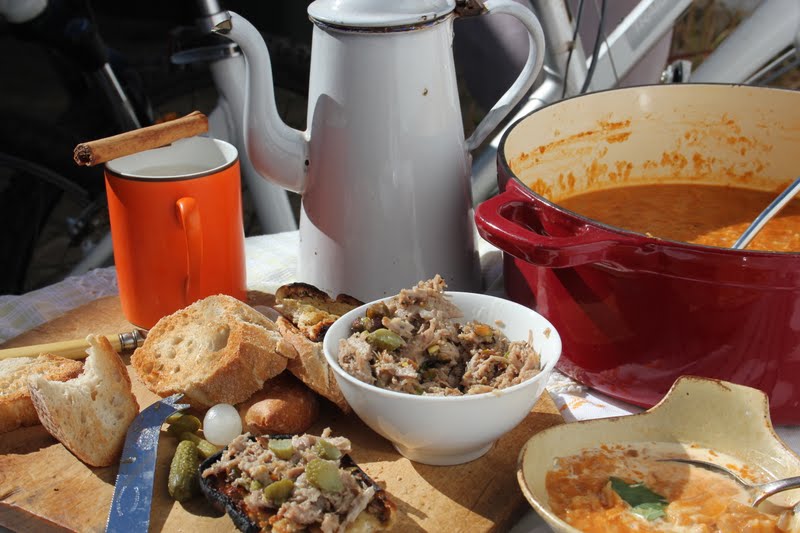
As we hibernate and hunker down in the depths of a cold Canberra winter, salmon and lentil salads just don’t cut it for lunches. With some forewarning of visitors arriving for the weekend, I prepare for a Saturday lunch that will sustain the hungry horde until dinnertime. Our visitors are committed funsters, exercise hard and spend much of their time here riding the great bike paths of Canberra.

I take cover indoors from the grey skies and freezing winter winds. I am more than happy to batten down the hatches by preparing the meals, stoking the fire, anything really, just don’t put me in the saddle on days like these.

Having scored some fresh duckling, and not enough time to make a confit, I’m leaning towards the next best thing, duck rillettes. This, combined with some hot and spicy traditional mulligatawny soup with coconut milk, should hit the spot. With a bit of time leftover, I prepare a thermos of cinnamon and malt infused milk, with just a dash of brandy, for fortification purposes, of course.

Rillettes can be taken on a picnic if needed and easily spread on a piece of crostini or sour dough with some baby cornichons. They also make a great TV dinner or a starter to a meal. We had these recently in France as part of a lazy afternoon lunch among the vineyards of Alsace.

Appetites seem to grow in this weather, with gnawing hungers screaming out for rich, weighty foods, steaming soups and hot drinks. Our noisy gaggle returns from their ride, lingering to see what’s on offer. Diving in with helmets, hats and gloves off, the red cheeked mob eat and drink noisily without saying a word. I can only assume this is a sign of approval.

Duck rillettes
3 to 4 duck legs, with thighs attached
sea salt
ground black pepper
4 bay leaves
4 sprigs thyme
2 large garlic cloves, peeled and chopped
chopped tarragon
approximately 400g duck fat, melted slightly
70g pistachio nuts, toasted and chopped

Preheat the oven to 150C. Place the duck legs into a roasting dish so they fit snugly together. Sprinkle the garlic, thyme, and bay leaves over the top and season with salt and pepper. Cover the duck legs with duck fat. Roast for 2 ½ hours until the meat is tender and falls off the bone. Allow the duck legs to cool in the dish slightly and lift out onto a plate. Strain the duck fat through a fine sieve and set aside. Shred or chop the meat, discarding the skin. Place the meat in a mixing bowl.
Add the pistachios and tarragon to the duck meat and mix gently. Moisten with a little of the strained duck fat and season to taste. Place the mixture into a jar or dish, pressing down with the back of a spoon and pour a little of the reserved duck fat to cover and seal the top. Refrigerate to set.
Remove the rillettes from the fridge half an hour or so before serving, to allow to come to room temperature. Serve with pickled vegetables, and cornichons on warm crostini or toast.

Mulligatawny Soup
Serves 4
2 onions, chopped
30g butter
sea salt and black pepper
4 tbsp tomato puree
3 tbsp curry powder
2 tbsp plain flour
400ml chicken stock
400ml coconut milk
1 green apple, grated
3 tbsp ginger, grated
chopped coriander
sour cream for drizzle

Melt butter in a large saucepan, add the onions and fry for a few minutes till softened but not coloured. Stir in the tomato puree, curry powder and flour, stirring frequently for 2 minutes. Add the ginger and apple, continuing to cook on high heat for a few more minutes.
Add the stock, a little at first, stirring and scraping the caramelisation off the bottom of the pan. Add the remaining stock and coconut milk, and bring to a simmer. Allow to cook until slightly thickened. Add the rice and simmer for another 4 minutes. Season to taste. Serve with chopped coriander and a swirl of sour cream.

Malt and cinnamon toddy
Serves 4
2 cinnamon sticks
1/3 cup malted milk powder
4 cups milk
1 vanilla bean, split open
¼ cup good quality brandy (optional for adults)
Mix a little of the milk with the malted milk powder in a cup till dissolved. Pour the milk and malted milk powder and the remaining milk into a saucepan over low heat and bring to the boil while stirring. Remove the cinnamon sticks and vanilla bean. Add the brandy, pour into mugs and serve.